Why Consumer 3D Printing Companies Should Think Twice About Fundraising

As I’ve spoken to many in the Consumer 3D Printing industry, I’ve heard an increasing amount of talk about raising money from professional investors. While an angel round could bring stability and some financial certainty, raising institutional money is very big risk in such an early market. Venture Capital can bring validation, a comfortable bank account and open a few doors thanks to partner networks, but at this point, I believe the risks far outweigh the gains for Consumer 3D Printing. Here’s why:

Why consumer 3D Printing companies should not raise Venture Capital now

1) We haven’t crossed the chasm yet.

If we had crossed the chasm, people wouldn’t still be asking why you would ever want a 3D Printer. Zeepro would have already well exceeded their Kickstarter funding given how nice looking and feature-rich their printer is (instead, they have sold 300 printers and barely exceeded their funding goal). We would also have a robust set of applications to leverage 3D printers, which excluding design tools (the 3D Printing era’s BASIC imho), is fledgling or non-existent today.

Spreadsheets and word processing programs were largely responsible for early majority users buying computers in the early 1980s. Specifically, VisiCalc has been credited with catapulting sales of the Apple II when it came out in 1979 (2 years after the first edition of the computer). Of course, those programs weren’t even possible until early computers advanced their hardware in key areas like memory, hard drive space, and displays as well as overall product reliability.

Today, we have many hardware improvements still needed for 3D printers to enable new use cases. Breakthroughs in multi-extrusion, print speed, materials and huge improvements to the kluge software experience are all needed to create a “Whole Product” as described in the classic, Crossing the Chasm. Until then, sales will continue to be measured in the hundreds or thousands, which does not align with the mass market growth investors crave.

2) Fundraising is an accelerant for your business.

If you raise venture funding, you may be able to relax a bit from the stress of bootstrapping (i.e.- making payroll), but it comes at a high cost. Venture Capitalists invest with the expectation of the funds being spent aggressively and creating significant growth. If you haven’t had explosive growth, the next set of dollars will be even more expensive, if they’ll fund you at all.

Once you hire people ahead of revenue, it’s hard to stop and even more painful to do layoffs. But don’t take my word for it. Ben Horowitz put it best last week:

“We should first decide how much we like laying people off, because if we love it then lets stay cash flow negative, because when we don’t generate cash, the capital markets decide when we have to lay people off. In fact, we will have to listen very carefully to investors on everything because as soon as they stop liking us, we will start dying. I don’t know about you, but I do not want to live my life that way. I do not want to have to tell all of our employees that we will do what we think is right until investors tell us we have to do otherwise. I want to control my destiny.”

If you absolutely need to raise money, sticking to Angel investment is the only way to go; prudent angels will understand the need for financial stability without aggressively outspending your revenue. You could sell them on plans to turtle up and survive the chasm crossing while placing a few intelligent bets.

Larger investors will neither understand this strategy nor support it as they have funds to return over a time frame that may be shorter than the path to massive growth for your business. You should expect a volatile, painful 2 to 3 year chasm crossing period before we really hit the early majority years. If you raise capital during this time, you will require multiple, highly-dilutive rounds of capital before you can really return value as investors usually expect a round of funding to last just 12-18 months when deployed properly.

3) VCs don’t just talk to you because they want to give you money.

So you’re getting repeat meetings with a VC. They seem friendly and interested in the data you’re sharing and the plans for your business. While it’s true it could be that they’re serious about investing, it’s also quite common for meetings to be free research for them on up and coming industries (Note: I’ve specifically heard from some 3D printing companies they “wasted a lot of time” doing this). Walking in their shoes, a few pitches from different 3D Printing companies would give a great view of the market to gauge when they may be ready to invest years down the road.  

Of course, most VCs are also great at the “soft no”; they’re happy to continue to have you or one of your cofounders make more pitches and exchange more information without actually committing to funding or outright saying no to you. And as a worst case scenario, they can use your information to fund a competitor or steal your idea. I’m not advocating for you to completely ignore VCs, but choose wisely who you invest time in speaking with. Ask yourself if you could better spend that time growing your business.

4) The early PC industry succeeded without it.

In the early days of the PC industry, Venture Capital was just emerging and largely was not involved in funding companies. Microsoft only raised $1 Million in its history and at a time when it really did not need it. While Apple did raise money, the majority of the funds came in the 1980s, long after the market was established and Apple was selling millions of computers. The rapid growth of the market as it hit the mainstream allowed profits to easily fund additional growth and made many founders and their employees very rich thanks to their non-diluted stock options.

Early markets require new marketing channels and use cases. By Clayton Christensen’s definition in the Innovator’s Dilemma, truly disruptive innovations have to find their own way beyond what the existing industry does with a technology.  As PCs were before, consumer 3D Printers are just that kind of disruption, which means there is going to be a lot of experimentation and exploring to find the best opportunities and develop new ones. There are very few venture investors that have the patience and interest in letting companies do this kind of exploring, since their capital and experience is better leveraged for scaling.

5) Your best investors are your customers.

No one said it would be easy. To really meet where the market is going (because honestly, we don’t know), finding the first few people who will pay for something you’re doing is huge. They’ll help you build the product others will need, find others like them and keep your business afloat financially in the meantime. There’s a reason these businesses started in garages, motel rooms in Albuquerque, and the like; they couldn’t afford anything else.

To survive the chasm means finding a beachhead and expanding. The focus and controlled desperation of bootstrapping can be a powerful tool to develop such a market. If you’re sitting comfortably with venture capital, the hunger to find this will be less and you may even find yourself building a bunch of features that no real customer wants until it’s too late.

—

We’re in an exciting, but challenging time in the 3D Printing industry. There are many more players currently than there will be winners, which is the tragic, harsh truth of entrepreneurship. Raising money may seem like the obvious way to get a leg up, but it could also be a major waste of time or drive you and your business right off a cliff.

—

Want more insights like this right in your inbox?

Sign up for my 3D Printing newsletter, Observations in 3D here: http://bit.ly/Observe3D

3 Books Every Investor Should Read

As an entrepreneur, when I consider the ideal investor I would like to have, it’s a lot more than someone with money. I want them to have characteristics like:

  1. Able to make smart bets: Investments are largely made when it’s too early to tell with certainty who or what will win in a market. 
  2. Add value and insights: This is more than replaying personal war stories and biasing from your own experiences.
  3. Asking good questions: Someone who pushes founders to take a step back and recognize the things that matter often comes more from asking questions than providing answers.

Being great at those three things is no small task. Fortunately, there’s been some great books written that can supplement the knowledge and know-how of even the most veteran entrepreneur or get a new investor off on the right foot. These are books I’ve read and re-read because they’ve providing so much value to me and I believe can specifically help investors as well.

The Innovators Dilemma by Clayton Christensen

Disruption is a brutally abused word in tech these days. Clayton Christensen brings it back to reality and explains how it really works in this classic written in the 90s (and has arguably gotten better with age).

As an investor this is critical so you can call BS on an entrepreneur that claims they’re disruptive, but really are hopeless. This book will help you understand not only how to recognize disruptive technology in its earliest days, but what it means to get in the market, grab a position and successfully grow and take down the incumbents. Benjamin Tseng, a Bay Area VC, has a great post also discussing the value of this book for investors here.

Investor Scenario: A founder claims they have a disruptive innovation and are telling you about their immediate mass market plans, The research in Christensen’s book will help you guide them a better approach or to pass on the deal.

The Master Switch by Tim Wu

Over the past 100 years, communication platforms have dramatically changed and evolved. During this time, we’ve seen the emergence of the telephone, radio, television, email, the internet and more. Without fail, every time one of these new mediums emerged, they fought an uphill battle to eventually win the market.

This book goes perfectly hand in hand with Innovator’s Dilemma by walking you through how many technologies were slowly commercialized and changed the world. By the time you get to the end the patterns will be impossible to miss and priceless to match against what you see in new markets emerging (some of which you hopefully can invest and place strong bets on).

Investor Scenario: A founder has a transformative technology. Knowing the patterns of past innovative companies, you can help them anticipate resistance they may face both in the market and legally.

Tribal Leadership by Logan, King & Fischer-Wright

A book on culture to go hand in hand with two on innovation cycles? Absolutely. While there are other books out there I’ve rated higher on culture, none are more powerful for an investor.

You only get a limited amount of time with a founder and their team, so knowing how to quickly tell the difference between a strong team culture and one struggling is huge. What makes Tribal Leadership special is how it helps identify the key words that you can listen for to tip off how a company is really doing. 

Armed with this information, you can help a founder get back on track if some of the team has issues.  It can also help you decide if you should pass on an investment that looked good otherwise; a motivated, excited team will be significantly more productive, work longer hours and help recruit the best talent. You need those for the characteristics for a company to hit deadlines and win the market.

Investor Scenario: You visit one of your investment’s offices. If you overhear employees talking about their excitement for the mission, they’re operating at a high level. If instead they’re complaining about how much their work or a project sucks, you may want to ask the founder some questions.

——-

Unfortunately, many business books are a complete waste of time. Luckily, gems like the 3 books above exist and help tremendously to educate us, change our perspectives and diversify our knowledge on important subjects. I’d love to hear any great book recommendations in the comments for investors or entrepreneurs.

Do you really read?

Spend five minutes on any social media site and you’ll see hundreds of articles shared and discussed. In our world of infinite knowledge at our fingertips, the challenge now becomes Quality, not Quantity.  As you read any article, book, answer or social media post, it’s important to take the time to digest what you consume.  Did you just waste ten minutes or was it worth the read? What did you learn? Do you really get it?

In our fervor to join the conversation or “catch up” on those thousands of articles you’ve saved in RSS, Pocket, Instapaper, or otherwise, we often miss the point.

We are all Hypocrites.

Too often we read something, share it and talk about it, but fail to retain its meaning. Maybe you retweeted something about taking care of employees, but then you failed to show interest and compassion for an employee that came into work visibly upset. Maybe you just shared an article about the importance of open communication, but then disregarded comments from someone who tried to bring up a problem with you. Regardless of what it is, you’re wasting your time with all your reading if you don’t use it to drive action.

I struggle every day to follow through on the things I passionately read and write about. As a habit, I re-read my own posts to remind myself what I care about so much. It’s easy to forget things like actually giving praise despite knowing how important praise is in motivating and appreciating your employees, remembering to always use the best structure for customer development interviews, or to keep applying the best takeaways from a great book I read.

What do we do about it?

I challenge myself to answer the following questions in everything I read:

  1. Has this taught me anything new and valuable? (If not, move on quickly)
  2. How can I apply insights from this article today? (Wait and I’ll forget)
  3. When have I applied the ideas from this post? Where have I not, but could have? (What was the difference?)

The real key is Self-Awareness with Discipline.

One of the hardest things to do in life is to get outside your ego. This awesome post by the CEO & founder of Redfin captures it well:  

“Most people spend nearly all their energy trying not to change. This is what the philosopher William James meant when he wrote the mind’s main function was to be a fortress for protecting your ego from reality. When the mind has to accommodate a new fact, James argued, it doesn’t settle on the change to its model of reality that is most likely to reflect reality. It protects the fortress, calculating the smallest possible modification to its bulwarks that can account for the new fact.

As I read and observe my daily life, I try to look for opportunities to apply all the great things I’m reading and everyone is sharing. And when I write or give others advice, I challenge myself to make those things not just aspirational or what I do at my best, but what I apply day in and day out. It’s not easy, and I don’t always succeed at this, but it has helped make me and those I interact with a little better every day.

How do you apply what you’re reading?


Founders: You don’t own your employees

[Ed. note: This is in response to a post by David Hauser entitled, “The Startup Side Project Bubble” which you can read here: http://buff.ly/10Lw9ek]

So many founders forget something simple: You do not own your employees.

They are human beings with their own passions, interests and lives. You have a vision of a reality you want to create. After much labor and hard work to get it off the ground, either funding or your own revenue allows you to hire help. Those people are choosing to devote a significant portion of their lives to your cause to help make it possible. Take a moment to appreciate that. 

In David’s post he argues that employees having side projects is bad for them and his business. This is so backwards.

First, telling someone what they should and shouldn’t do in their free time is a tremendous insult to them and their personal judgment.  It’s also incredibly short-sighted.

You want employees with side projects.

Especially for the creators at a startup (ie- the people that design and build your product), there is tremendous benefit to them having side projects. A few of those benefits are:

  • Experimentation. An outlet to experiment with new technologies before suggesting the company use them; no amount of research compares to having used a new framework and being able to provide first person accounts of the tradeoffs.
  • Independence. A place where they can make all the decisions (for better and worse) versus the negotiations that often happen in a company. You can also call this their creative release.
  • Mastery. The ability to further hone skills in a self-directed fashion, getting them to the 10,000 hours to mastery faster than standard work hours alone would provide.
  • Relief. Providing some variety in their life’s work can help avoid the burnout that comes from only working on one thing for too long.
  • Focus. Motivating them to get their work done efficiently because they don’t have every hour of the day to work on it. The saying goes, “If you want something done, ask a busy person” for a reason.
  • Contribute. The ability to help the greater tech community through contributions to open source projects, which wouldn’t exist without many people having side projects.
  • Network. They’ll often work with people outside their day job on these side projects, which will grow their learning and network. It might even provide the next recruit when you need more help at your startup.

And I’m sure there are others.

Great employees are a package deal.

In the early days of a startup, you want athletes, which are often entrepreneurs themselves.  Later, you want specialists who have deep expertise in their skills. By their nature the same skills you value each day in either group’s work for you also lends itself to having these side projects: In early employees that means a breadth of knowledge, while later, the depth of knowledge that comes from side projects is what makes many great later stage startup employees.

I would not be running product at KISSmetrics if I had only put my head down and worked on my past jobs (I wouldn’t even be in tech now most likely…I have a degree in Electrical Engineering). The skills that are core to my job came from side projects like Greenhorn Connect, taking the time to learn new skills in my free time and reading voraciously. Every founder wants to hire people with passion for their craft and a wide range or depth of skills.  This is a package deal.

“Why don’t you quit your job already?”

Taking a step back and looking at David’s argument, it seems centered around the idea that if an employee has a side project, they should quit their job immediately and start a company. While they should definitely quit their job if they’re ready to make a run at it as a business, they may not do that right away because of a few reasons:

  • Funding. They lack the personal funds and see the foolishness in fundraising when they don’t even know whether an idea has legs whatsoever.  Not all side projects have clear paths to revenue/bootstrapping either.
  • Motivation. Many side projects are for fun and passion. Sometimes those become businesses worthy of full time attention, but usually they are just an enjoyable thing to do with only part of their time.
  • Stability. Depending on what else is happening in their life, it may not be the time to start a company. If they’re getting married, just moved to a new city or a close family member is on their deathbed, they may not want the upheaval of launching a startup on top of that.

None of these reasons prevent a person from being a valuable contributor to your startup. In fact, someone may work for your company and add tremendous value you’d otherwise never receive.

This is a seller’s market.

If you have hard to find skills like design, product management or engineering, it’s a great time to be a startup employee. Companies must compete for you. With salaries skyrocketing, it takes more than money to attract talent. Having a good culture, treating people well and supporting them as individuals become important factors as well.

David’s views may work for him, but I caution other founders from adopting his cynical attitude towards those with side projects. The potential gains far outweigh any losses in hours David seems so concerned with and run the risk of turning off potential great team members.

How to Become a Better Leader Instantly

Whether building a career at a large company or starting your own, if you want to advance and grow, soft skills like leadership are just as important to develop as hard skills like programming languages and sales tactics. Despite being a species evolved to live and work in groups, most of us struggle to effectively communicate with and motivate others. This is unfortunate, given how important and helpful a skill it is to master.

I’ve been studying leadership for a while and there are many techniques for motivating and effectively working with others. Many take some practice and skill. Fortunately, there are a few things you can do to very quickly develop your skills, which I was reminded of as I was recently reading the excellent book, “Fierce Conversations: Achieving Success in Work and Life One Conversation at a Time.”

One tip in particular stood out as something I’d heard many times before and I realized it’s the single easiest, yet important tactic to learn:

Give specific praise regularly

Animal trainers around the world know the best way to train animals is through rewarding good behavior. Just think about the last time you were at Sea World and the seals and dolphins got fish and other treats after each trick they did.

While humans are much more complex creatures, we still like rewards, just often in a different form: praise. Because this praise is written or verbal, the key is to be specific.  Don’t just say, “Good Job.” Instead, you’ll want to pull out exactly what was good so they know to do it again. Some simple examples could be:

  • “Great work on the folder feature, Susan. I really like how you made your code clean and easy to follow with comments explaining each section of the code.”
  • “Your report on quarterly earnings was great, Tom. Your graphics were perfect for explaining to the board how we recovered from the rough month.”

After praise like that, I guarantee you that Susan will continue to comment her code and keep it clean and Tom is much more likely to keep investing time to make great graphics for his reports.

This type of praise is powerful for a few reasons:

1) People want to feel appreciated.

Assuming you like your job even a little bit, you want to do good work. There are parts where you’ll put in extra effort. People just want to be recognized for that hard work and that will motivate them to do more of it. Think back to a time someone thanked you for a great job on a project you slaved over for weeks. Give others that feeling.

2) The absence of praise will be felt.

When someone does subpar work and you give no praise, they will notice and want to work harder to seek your praise they previously enjoyed. On the other hand, if you don’t praise people regularly, they are less likely to continue to put in the extra effort on projects. We have all had those moments where we went the extra mile on something and were disappointed when no one noticed. Chances are, you didn’t do it again for that boss or coworker. Don’t be that kind of manager.

3) People want to be noticed.

Especially in the startup world, it’s easy to take great work from your team for granted. Everyone just ships feature after feature, marketing content over more content and keeps grinding. This is also why celebrating wins as a team matters; it’s an opportunity to recognize both the collective efforts of the team and specifically who made major efforts to help the team get there. This is the key to making people feel like they’re “part of something bigger” that draws so many to the lower pay and longer hours of startup life.

Can you remember the last time you praised each member of your team? Were you specific with them or just a vague, “Good job”?

—

This is just one of the awesome tactics you’ll learn in the book, Fierce Conversations. It covers many excellent topics and will help you understand how to have productive and often difficult conversations effectively with others in both your personal and professional life. I scored it a 9 out of 10 on my ratings scale and highly recommend it.

Great Chefs and Great Entrepreneurs

One of the best rated restaurants in the world serves no cocktails, no appetizers and only has 9 seats. It has no menu and only serves a variety of sushi as laid out by its 85 years old master chef and his team. Jiro Ono, who has been honing the craft of sushi for over 75 years, is the master chef featured in the documentary, Jiro Dreams of Sushi, which tells the story of him and his restaurant (#ProTip: it’s free on Amazon Prime Instant).
It is truly amazing and inspiring to hear his story of dedication, attention to detail and passion to work with the best; whether it be his source of rice, the fisherman he buys from or the 10 years of training for his apprentices, Jiro strives for perfection. During the documentary, a Japanese food critic revealed what he felt separates Jiro and other great chefs:

  1. They take their work very seriously and consistently perform at the highest level.
  2. They aspire to improve their skills.
  3. Cleanliness. If the restaurant doesn’t feel clean, the food isn’t going to taste good.
  4. Impatience. They are better leaders than collaborators. They’re stubborn and insist on having it their way.
  5. Passionate.

When I look at the food critic’s list of qualities, I realize that those are the same qualities that can apply to any craftsman. Entrepreneurs that put a high value on design, like most notably Steve Jobs, seem to fit that list as well.

What qualities make a great craftsman?

Should founders care about their employees’s personal lives?

{Note: this is part of an experimental series of short posts. My goal is to spark more discussion and post things that aren’t fully thought out 1,500 word mega-entries I usually post.}

This tweet got me thinking today:

There are assholes and then there are people who have moments when they act like one. In a startup there is no room for the former, but we all have moments where we may be the latter.

I’ve found myself in the latter bucket a number of times since I got to SF because of the stresses I’m experience in adjusting to a new environment and starting over socially. Try as I might, I haven’t always been able to leave issues at home and just be my usual working self.  Fortunately, Hiten and others have been understanding of me. Team dynamics are hard to get right and when someone is being an asshole, it’s poison to the environment. That’s why I posit it is important for founders to care about their employees personal lives.

Of course, none of this is limited to just assholes; employees underperform for a multitude of reasons in a variety of ways.  If you have a connection with your employees beyond their job description, you’re likely to find out what may be the cause of an issue. And you wouldn’t have to be their therapist to be helpful and understanding.  At the least, you can help patch up some relations around the company by telling others on the team to cut that person some slack (without necessarily going into specifics) and making some recommendations of what the employee can do to help themselves.

What do you think?

Should founders care about their employees’s personal lives?

SF Startup Survival Guide: How to help your employee move to San Francisco

Congratulations! You’ve found a new person to join your startup in the Valley. You found them outside the area, so now you’re moving them so they can join your team in your office.

They’ve signed their offer letter and booked their flight, so all you need to do is get their desk ready and a set of keys to the office, right? Wrong. If you really want to help your employee succeed and build a strong relationship with them, you need to understand there are many needs you should try to help them with beyond the office.

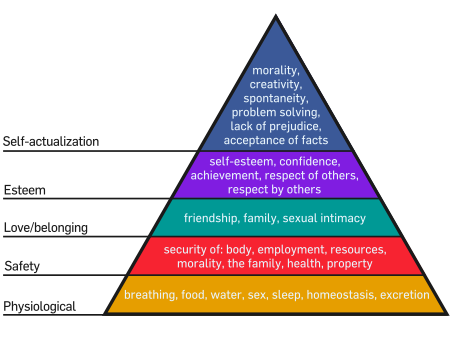
The key to understanding what your new employee faces is to follow Maslow’s Hierarchy of Needs. Most people join a startup for Levels 4 and 5, because they bring opportunities for more rewarding and interesting work than you’ll find at a big company. It is likely many of the keys that convinced them to join your company play to those desires.

The problem is, when you move, Maslow’s Hierarchy is flipped on it’s head; your basic life needs of safety, shelter and belonging are all wiped out as you leave those things behind in the last place you lived.  Maslow made his list a hierarchy for a reason; you don’t care about Self-Actualization and Esteem nearly as much when you don’t know where you’re sleeping at night or have no friends.

Having moved to SF just 4 months ago, I’ve had to rebuild those first three levels (to varying degrees of success). I’d like to share my advice for a founder importing talent so their employees can have an easier transition.

Level 1: Physiological

When you move to a new city everything is uncertain. Where will you live? How will you get to work? Where do you buy groceries and other household items? Your most basic needs are up in the air, which will mess with even the strongest individual’s psyche.

If you’re moving as a young adult, chances are you’re going to be moving out here and then starting your search for an apartment. Especially in San Francisco, nothing could be more stressful. Even if you’re lucky enough to have a friend’s place to stay, most people feel uncomfortable putting their friends out and even the best friends are going to be grimacing if a stay with them drags on very long.

What should you do for your employee?

In my last post in the SF Startup Survival Guide, I captured all the advice I learned in finding an apartment in San Francisco. There’s a lot that would blindside even a veteran of living in big cities, so the first thing would be to pass them posts like that and adding any advice from your coworkers. The latter has the bonus of being a great opportunity for a new employee to bond with a coworker.

Also realize that you should have your employee focus on finding their place to live. They will not be able to focus on their jobs while they don’t even know where their bed is going to be. If they’re like I was, I moved because the job was an opportunity to punch above my weight class which made me eager to prove myself. That came in direct conflict to taking time off to look at apartments, but Hiten (CEO of the company I work at, KISSmetrics) wisely encouraged me to, “do whatever you need to.”  It was 10:45am on a Monday that I found my apartment, the second one I had looked at that morning. If you only search on weekends, it will take forever to find anything given how competitive the market is and drag the stress (and productivity loss) on much longer than it needs to.

Level 2: Safety

Once you have the bare essentials of a roof over your head, your concerns shift to figuring out how to start building your life here in town: settling in, building routines and getting the items you may have discarded before moving.

San Francisco is a decently safe city…except where it isn’t.  A newcomer could be fooled by the high end stores on the borders of the Tenderloin and City Hall and Opera in Civic Center. These are not places to be in at night without your wits about you.  It’s also an expensive city that can quickly shrink your bank account.

What should you do for your employee?

Make sure they have what they need and know where to go for things. Don’t assume anything. Showing you care beyond their ability to ship code or execute on marketing plans not only shows you’re not a selfish leader, but it will score major points with them.  Those points matter a lot in the competitive employment environment here; it won’t be long before they’ll be meeting other startupers that would be happy to hire away your talent.

On the financial front, realize it is quite expensive to move. Based on my own experience and talking to others, it appears it costs an average of $5,000 to move an individual and upwards of $10,000 to move a family. This will put a serious dent in anyone’s bank account so if you can offer a relocation package, expect it to need to hit those numbers to cover someone’s costs. If you can’t offer one (I didn’t get one at KISSmetrics), realize the importance of that first paycheck and make sure that they’ll receive it on time and as expected.

Level 3: Love/Belonging

When you move to a new city, you’re leaving behind many of your friends and often much of your family, too. We’re all social creatures and by making a big move, you’re essentially cutting off much of your natural support system. As I’ve talked to others who are also transplants to this city, this seems to be the dirty secret no one wants to talk about; nobody wants to admit they have no life outside work (and not by choice).

I completely underestimated the impact my move from Boston to San Francisco would have on me personally. In Boston, I had spent the last 8 years building more valued friendships than I could count. I played on the same soccer team for 4 years, played Ultimate Frisbee with much of the same group for 6 years, built countless friends in the tech scene and still had great friendships with many classmates at Northeastern. I also had a best friend and roommate (hat tip to David Sonnenshein) who always had my back, was always down for a fun stuff to do and knew when I needed to be told, “Stop working and grab a beer!”

Within my first two weeks of moving out here to SF, my father had a heart attack scare (thankfully a false alarm) and my grandmother (last living grandparent) was diagnosed with terminal cancer (she passed May 15, 2012). Piling on top of all the other things I was dealing with settling into SF and having no one close to talk to, it almost broke me. It didn’t help SF is 3 hours behind the West Coast so I couldn’t talk to friends and family before work (I was asleep) or after (they were asleep).

Luckily, Hiten noticed there was something up and took a more active role and interest in my well being. We got dinner a number of evenings, which helped me have someone to talk to and led to us talking through my challenges. We then worked on some ideas on how I could handle things better, which included visiting my grandmother, taking some time off and being more strategic about how I settle in.

What should you do for your employee?

Your employee has a roof over their head and has started to settle in to the basics of life. Your work here is done, right? Wrong. A depressed or lonely employee will not be nearly as productive and engaged as one who is happy inside and out of the office.  But what can you do? You can’t be their BFF, but you can help.

As Hiten did with me, you should give extra attention to see how your new employee is doing in their first couple of months. Make it okay for them to talk about what they’re struggling with. The Friday off Hiten gave me after I told him about my dying grandmother was exceptionally helpful and built a lot of trust.

Beyond dealing with personal crises, the best thing you can do to help a new employee is have them make a list of all the things they loved most where they lived before. I did this and it helped tremendously. I realized that I really missed playing on sports teams, playing poker with my startup friends, seeing movies in theaters and “Scotch day” with my roommate.

Armed with a list of things I missed, I could start picking off what I missed doing. Your other employees can likely help out with this (I relied mainly on Google) and recommend the sports leagues they know about (I play in Bay Area Disc for Ultimate and Sports4Good for Socccer), sites with things to do (Zach Cole helped me find Sosh) and anyone they know that might share similar interests. SF has much to offer regardless of your interests, which definitely helps.

If you’re at an early stage startup, everyone is likely working long hours. That makes it all the harder to make friends as you don’t have a lot of free time to work on building those relationships. Recognizing this, building a culture of “work hard, play hard” can help, by ensuring all your employees have time to have fun and potentially become friends outside work, which has obvious ancillary benefits.

—————————

Hiring someone new to your team is more than adding an asset like a printer or computer; remember they’re a living, breathing human with hopes, dreams and needs. In this competitive environment, showing the extra effort to care about your employees beyond the work they produce can have a huge impact on your culture and retention.

And if you’re new to the city, know you’re not alone. Life has gotten a lot better than my first few weeks here, but I still have a long way to go to replace all the things I miss most about my life in Boston. If you want to grab coffee or a beer, know any casual poker games or have an affection for good scotch or movies, let me know.

How to Plan for Succession in Your Business

Whether you’re building a volunteer organization, a high growth business or a profitable side project, there is likely going to come a day when you no longer will be able to (or want to) run it.  Building something that outlasts your direct efforts is a real accomplishment, but few talk about how to actually do it.

As I just moved to San Francisco, I’ve gone through the process of succession for my role in Boston running Greenhorn Connect, a site that aggregates everything going on in the Boston startup scene.  (You obviously can’t run the day to day of such a site from another city.)

I’ve been fortunate enough to find someone great, Paul Hlatky, to take over and even managed to get my awesome team on board with the idea. This was no mistake. I was fortunate to have been able to solicit advice from some of Boston’s best leaders. I’d like to share what I learned from them and in the process of handling this succession.

Special thanks in particular to Tim Rowe of the Cambridge Innovation Center and Michael Skok of North Bridge Venture Partners for their advice for this post.

How to Handle Succession Planning for Your Organization

1) Start planning before you need a successor.

In October 2011, I talked with my team at our monthly Greenhorn Team meeting about the idea of me not always running the day to day of Greenhorn Connect. After 2 full years, it seemed like it would make sense for someone new to give Greenhorn Connect a fresh injection of energy and vision. At the same time, I was trying to launch a company, so I realized that a founder of a growing business would not have the time for a side project like GHC.

From that meeting forward, I started quietly keeping an eye out for a successor and thinking about what it would take to hand off the business. This led me to ask myself a few key questions:

  • What are the core benefits to the job I can sell someone on?
  • What is the archetype for the person & skills needed for this role?
  • What role would I expect to have after the transition?
  • What don’t I know about succession planning that I should learn about?

At the outset, I had few answers, but it gave me a framework to get started on the process before I needed my successor. It also helped me understand what questions to ask others when I had the opportunity to learn how they’d approach the challenges I felt were coming.

2) Be proactive and seek out your sucessor.

Once I realized the kind of person I was looking for was going to be a hungry student new to our ecosystem and hungry to help others that were new to the ecosystem, I needed to find some leads. By narrowing the definition of who I was looking for I was able to concentrate my search to a few student leaders starting to emerge in the community.  Since I didn’t want succession to be done in the spotlight, I had to seek them out directly and somewhat discretely.

Paul, then a senior at BU, had attended our massive conference the unconference and wrote a passionate blog post about connecting students. It came across my Twitter stream one night and I followed up with him by commenting and then meeting up with him for coffee.

3) Try before you buy.

Successions that fail don’t end well for anyone. Just ask John Sculley (aka- Jobs’s disastrous first successor). To save embarrassment for you and your potential successor, the best thing you can do is try before you buy. This means working with them and spending a lot of time with them to make sure you feel comfortable with them taking over.

For Paul and I, this trial ended up turning into a jointly organized Startup Career Fair. Pulling off a major event like this (500+ students and over 30 companies) requires a great deal of coordination and help. Paul showed incredibly skill as he recruited dozens of students to help, negotiated huge discounts from our venue and otherwise showed great business instincts. Even before the fair occurred I knew I had the right person, so I made the pitch.

4) Sell the Dream.

No matter how ugly, everyone loves their own baby. But if you’re handing it off to someone else, you have to convince them to love your baby, too.  Once you’re certain you’ve found the right person, you need to grab a pair of rose colored glasses and sell the dream of why this person should want to take over for you.

While I knew Paul was a great young hustler, I didn’t know everything about his motivations yet, so when I made the pitch, I laid out all the benefits I knew Greenhorn Connect could provide its leader. I focused on what I knew motivated me to do it as well as some of the things that were cool, ancillary benefits of the role.

If you’re stuck on what to say, just think about how Willy Wonka made it impossible for Charlie to pass on the opportunity to run the chocolate factory…and reveals much of his succession plans:

(Quite possibly the best “Sell the Dream” ever. Skip to 3:03 in the video)

5) Focus on values and key success factors.

When you choose a successor, you have to realize they are not you. You can’t expect them to do everything as you have done it before. Instead, you need to focus on instilling the core values of the role and what matters most to the success of the business or organization. These values and key success factors will act as guide posts for your organization’s new leader to make their own decisions by.

In the case of Greenhorn Connect, I shared a large Google Doc with Paul filled with insights to what I felt had made the site a success to date and things I felt were our core strengths and weaknesses.  I also shared with him many of the processes and productivity hacks I had used to run the site, but I tried to emphasize that he was welcome to come up with new strategies and tactics as long as they didn’t compromise our core values.

With what I’ve seen in Paul’s first 3 months running GHC, I can see that he learned the values and is now bringing some of his own style and ideas to the table, making Greenhorn Connect better than it was before.

6) Put them out in front.

Now that you’ve got your successor excited about the role and are instilling your values in them, it’s time to shine the spotlight on them.  When I asked Tim Rowe for advice on succession he had a lot to say about this in particular. He told me:

Give Paul the spotlight. Make it all about him. When you’re out there, let him be the one up on stage. Meanwhile, you should be in the background telling everyone, “isn’t he great?” Keep pushing him and promoting him from behind the scenes until one day you aren’t back stage and everyone simply knows he’s in charge now.

There’s a lot of pride and ego you have to swallow to do this, but in order to avoid casting a tall shadow on them, you need to let them shine while you’re still around.  It creates an intermediate step where you and your sucessor are together, rather than an instant switch from you to them that would be jarring.

7) Get out of the way.

Of all the steps, this is by far the hardest. You’re handing off your baby you watched grow and develop and now you have to trust someone else to continue caring for it. If you don’t get out of the way, you’ll end up meddling in their work, preventing them from succeeding.

To truly be a successor, they have to be able to put their stamp on it. This only comes with the independence of full control. As Michael Skok told me:

It doesn’t matter if they succeed or fail; either way if you do it right, they’ll be to blame for it, not you.

In some ways it feels heartless; when you’re handing it off, you want to feel like you have some lasting value you can provide. However,  the best thing you can do is tell them you’re there if they need you, but otherwise absent.

I’m still working at this last step. Since I stayed on as CFO at Greenhorn Connect, I still have some duties with the business. These duties are a blessing and a curse; I still get to see how GHC is doing, but it also then tempts me to interject in Paul’s work to make observations and suggestions.

Luckily, Paul is very gracious about them and he’s also strong enough to stick to his guns and do what he thinks is best. I think I’m getting better at this last step of late, but I still catch myself at times trying to prevent Paul from making his own mistakes. I have to let him make his own mistakes or he won’t learn.

—

Succession is hard.  But to ensure good things continue beyond the lifespan of its creator, it’s an important step in the lifecycle of every organization. I hope these tips will help you keep your great organization living on.

What advice do you have for succession planning?

Leadership Lessons in Real Life: Leading by Example

I’m a leadership junkie. Nothing fires me up quite like a good example of leadership, especially if it comes in the face of adversity.  It’s probably why I love so many cheesy sports movies like The Replacements and Hoosiers. They’re all chock full of leadership lessons. As art imitates life, it’s fitting this weekend I witnessed some truly profound leadership right in front of me at a soccer game.

Setting the Stage:

I play on an indoor soccer team as part of the Boston Ski and Sports Club. It’s nothing fancy and to the outside world, it’s pretty meaningless. But to those of us that play it has a lot of meaning. Many of us grew up playing sports and continued all through high school and college. There’s a void left by that only filled by finding a team sport to play even after school.

The team I’m on is pretty special. No egos. No dead weight. Just a bunch of athletes that enjoy playing with each other and find that perfect balance between hyper competitiveness and having fun.

That mix combined with a little luck found us in the championship game of our league this past Sunday. We were coming off one of our best performances of the year in our 5-3 semifinal victory, so we were pretty confident entering the game.  Things did not go as planned, but thanks to a great example of leadership in its purest form all was not lost.

Struggles and Setbacks:

In the first half we stumbled a bit to a 0-1 deficit. At halftime we all talked about how we just needed to finish a few opportunities and we’re in it. We were a little discouraged to have not scored yet, but confident in our abilities to have a solid second half.

Unfortunately, the second half started off very poorly. Within minutes of the half starting an errant play by me led to an own-goal. Seizing the momentum, just a minute after that, another goal was scored as our defense looked lost.

We hung our heads. Down 0-3 with 20 minutes left. But one of us refused to relent. Rob was more fired up than ever. He kept encouraging all of us to keep fighting. There was plenty of time to come back. He started chasing down every ball within range and ripping shots every chance he got.  The opponent’s momentum was stopped when Rob ripped his first goal to bring us within 2 goals.

Rob then subbed out after a lengthy shift and not long after a fourth goal came. down 1-4, just 15 minutes left. While the rest of us looked beaten and thought we were toast, Rob was more passionate than ever.  He ran down balls, beat defenders and kept pushing. At first the rest of the team didn’t respond. He was like a one man wrecking crew, but playing 1 on 5.

The Turning Point:

With Rob running around the field like a maniac for a few minutes finally another player on our team started making big plays too. Soon after another joined in and before we knew it, we had the whole team challenging every ball and pushing hard on goal.

Not long after, Rob got his second goal of the night. After the goal he ran right by our bench yelling at all of us to get fired up and get ready to come in and make a play too.

It worked. With 8 minutes left, down 2-4, Brandon dribbled hard into the defense and was taken down inside the box. Penalty kick. Like a man on fire, Rob convinced Brandon to let him take the shot, which he quickly buried in the back of the net. Now down by just 1 goal, Rob got a little crazy.

In outdoor soccer, when you’re down with little time left, you’ll often grab the ball after you score and bring it back to the mid line so the other team can’t stall waiting to kick off. Fired up after his goal and desperate to keep our momentum, Rob attempted to take the ball from our opponent and run it up. A near fight ensued that got our whole bench fired up and fortunately led to no penalties.

Completing the Comeback:

After the post-goal scuffle, there was no doubt that everyone on our team was ready to do whatever it took to tie the game. As a team we won every 50-50 ball in the open field and even took some 40-60 balls from them. We wanted it. Bad. Rob’s passion had infected the whole team and there was nothing our opponent could do about it.

With just 4 minutes left, a quick save by our keeper with a throw up the sideline led to a fast break. A quick give and go then led to a shot from the corner which Brandon buried in the back of the net. Tie game.

With all the momentum in our favor we pushed hard to try to win before time ran out, but unfortunately we were unable to settle it in regulation.

Overtime in our league means straight to Penalty Kicks (PKs). Leading the way once again, Rob scored our first PK, and went on to lead encouragement of our goalie and other shooters. A clutch save by our keeper and 3 straight goals made led us to a 3-2 victory in PKs.

The Moral of the Story:

Leadership is not about what happens when times are easy. It is what you do when the times are tough that matters. When the rest of the team was ready to give up, Rob refused to lose.  When no one else seemed to have any fight left in them, Rob continued to lead by example, challenging every ball, running hard on every play and encouraging everyone.  Eventually, he got others to join in and soon everyone was believing again and putting everything they had into the game.

No matter your challenge, realize that leadership means flying in the face of group think (the game is over) and being bold enough to stick with it long enough for others to join you and change your situation, whether that be a soccer comeback, your company on the ropes, or dancing on a hill (my favorite TED talk ever, below):